 Polle de Maagt
  Polle de Maagt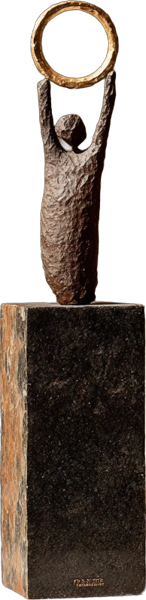
Where did it come from?
My maternal grandfather died too young. Luckily, I still have memories.
He was a special man. He was a civil servant who helped turn the Tilburg Fair into one of the largest fairs in Europe.
He was a storyteller. I vividly remember his stories about the Second World War and how he got things done by giving sweets to German soldiers. For me, he once rebuilt the Battle of Waterloo with sweets, showing the positions of Napoleon and the allied forces.
He was also known as a pathfinder. He always chose the narrowest, most overgrown route. In our family, we still call those “Verhelst paths”.
But he may have been best known for his love of games.
The Game. Any game.
I remember my family playing Skat, the German card game. My grandfather did not join to win. He joined to make the game better.
He deliberately made illogical moves. He bluffed. He threw everyone off balance.
And when people fell for it and the whole table enjoyed what happened, his eyes lit up.
That was his way of winning.
Our family is competitive. I do not like losing. Most of the others do not either.
One of the games we play is the dictionary game: everyone writes a convincing fake definition for an obscure word, and the others guess which one is real. A game built on bluffing.
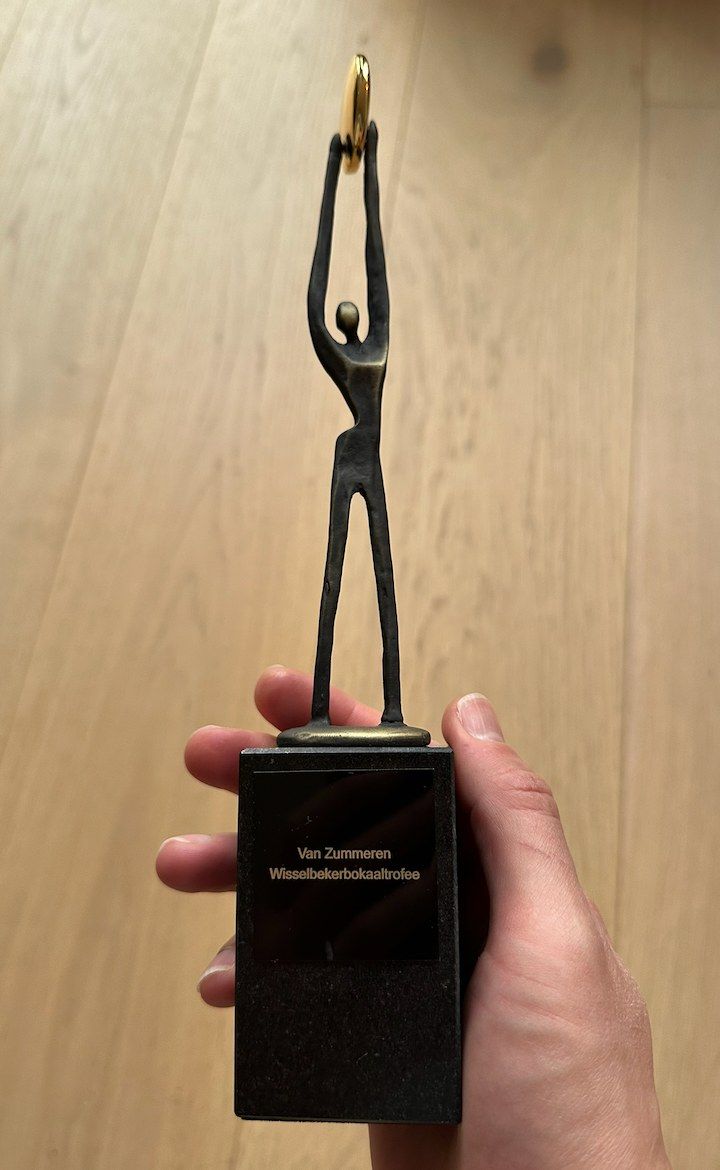
To soften the competitive edges, we introduced the full and intentionally ridiculous “Van Zummeren Wisselbekerbokaaltrofee” in December 2023. We play for it with the whole family, kids included.
The trophy does not go to the winner.
It goes to someone who did not win but contributed most to the enjoyment of the game. The person who bluffed brilliantly, invented a ridiculous strategy or did something that made the whole table laugh.
It rewards playing in the spirit of my grandfather.
And it changes the game. People still want to win, but now there is another way to succeed.
How do you run it?


Invitation.
Before the first round, put the trophy on the table and explain what it is for. Not for winning, but for making the game better. The regular winner cannot receive it.
How space is arranged and materials needed.
One deliberately over-the-top trophy, visible during the whole game. Ours is a thin bronze figure holding a golden ring above its head, on a black stone base with the full name on a plate.
How participation is distributed.
Everyone plays normally, with the original rules and scoring. Everyone except the winner can earn the trophy.
How groups are configured.
Any table works: family, friends, a team on an evening out.
Sequence of steps and time allocation.
- Put it out. Before the first round, put the trophy where everyone can see it.
- Play. Play the game with its normal rules. Notice contribution, not performance: bluffing, unexpected strategies, good stories and moments that lift the table.
- Award it. After the game, award the trophy (2 minutes). There is no vote or fixed rule; the table usually already knows whose moment it was.
- Pass it on. The recipient keeps it until the next game. Over time, the trophy moves through the family.
When does it work best?
The trophy works best with games where competition can take over the room.
Introduce it before the first round, but only discuss the recipient after the game. Otherwise people start performing for the trophy instead of contributing naturally.
What did we learn the hard way?
Do not turn the second prize into another points system. The moment you score “fun”, the ritual loses its point.
Keep the criteria broad. A smart bluff can win. So can an absurd answer, a generous move or recovering a flat moment at the table.
And do not give it as a consolation prize. It is not for the person who lost most painfully. It is for the person who made the game better for everyone else.
What are the variations?
- Use it during a game night across several games instead of after each one.
- Let the current holder present it to the next recipient.
- Ask the recipient to retell the moment that earned it before the next game starts.
Add one prize to your next game night that cannot be won through points. Reward the behaviour you want more of around the table.
Origin: a family ritual, in memory of my grandfather Ernest Verhelst. Photo: the real trophy, in my hand.